CEA Drives “Thailand’s Creative Economy” onto the Global Stage World Bank Highlights Potential to Create 3 Million Additional Jobs by 2040
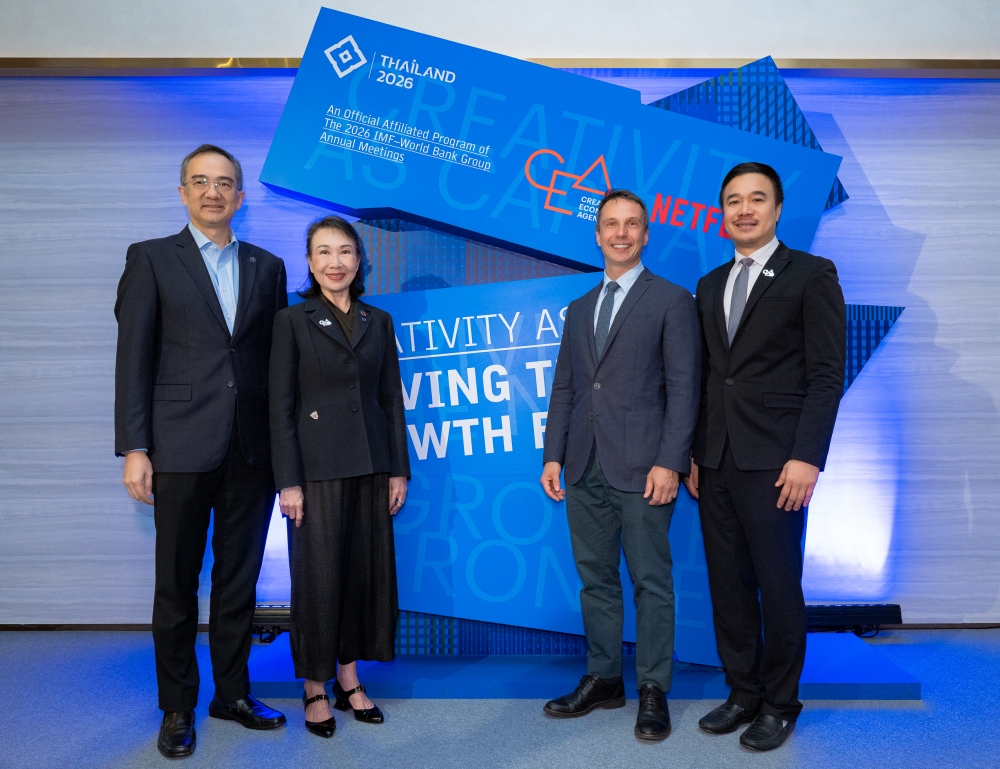
Thailand’s creative economy holds significant potential to drive economic growth, generate quality jobs and support the country’s transition towards high-income status. To unlock this potential and strengthen international confidence in Thailand’s creative industries, the Creative Economy Agency (Public Organization) or CEA, in partnership with Netflix, is stepping up efforts to strengthen Thailand’s creative industries through “CREATIVITY AS CAPITAL: Driving the Next Growth Frontier.” an Official Affiliated Program of the 2026 IMF–World Bank Group Annual Meetings, held on 13 October 2026 at the Andaz Grand Ballroom, One Bangkok, Bangkok. The event provides a platform to showcase the potential of Thailand’s creative economy to businesses, investors and policymakers from around the world.
World Bank Highlights “Creativity” as a Key Driver of Thailand’s Economy
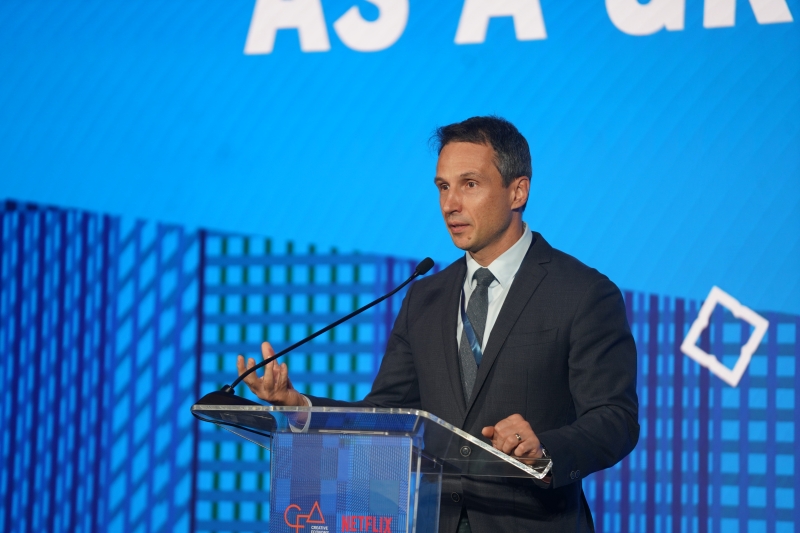
Mr. Denis Medvedev, Global Director for Trade, Competition, and Business, World Bank Group, presented the keynote “Thailand’s New Horizons: The Creative Economy as a Growth Engine,” highlighting the creative industries as one of the industries of the future with significant potential to drive Thailand’s long-term growth.
Creativity is deeply embedded in Thai society and is reflected across a wide range of sectors, from food, fashion, design, architecture, film, music, advertising and traditional crafts that embody the country’s cultural heritage. Meanwhile, a new generation of entrepreneurs is leveraging digital technologies to bring Thai creative works and content to international markets.
Thailand’s creative economy is estimated to contribute approximately THB 1.7 trillion, equivalent to 10.8% of the country’s total Gross Value Added (GVA). In addition, core creative industries account for approximately 4.6% of GVA, highlighting the sector’s significant contribution to the Thai economy beyond its cultural and social value.
The creative economy also generates spillover benefits across other sectors. According to the World Bank Group estimates, every THB 1 spent on the film and film production industry can generate an additional THB 2.5 in economic activity across other sectors. Despite this potential, the creative sector currently accounts for only around 2% of formal employment, indicating significant room to expand job opportunities, particularly for younger generations.
Thailand’s creative goods exports have also more than doubled over the past two decades, rising from approximately US$ 3.2 billion to 8.2 billion in 2024. However, the export base remains relatively concentrated, particularly in gems and jewelry, which accounted for approximately US$ 5.4 billion in exports in 2024. Therefore, Thailand’s greatest opportunities lie in creative services and digital content, which are experiencing rapid growth. Meanwhile, technology is helping break down barriers between Thai creators and the global market, enabling creative works produced in Thailand to reach consumers worldwide.
World Bank Outlines Three Transitions to Unlock Thailand’s Creative Econom
The World Bank Group identified three key transitions that Thailand should accelerate to unlock the full potential of its creative economy: (1) shifting from project-based support policies towards policies that create an enabling environment for creative businesses to grow and scale; (2) moving from creating IP to monetizing and financing IP by developing mechanisms that allow intellectual property to generate revenue, attract financing and create greater economic value; and (3) transitioning from local creation to global market connectivity by strengthening connections between Thai creators and international markets.
The World Bank Group estimates that under a scenario in which Thailand’s content industries approach the performance of South Korea, the country’s creative economy could have the potential to generate up to 3 million additional formal jobs by 2040, while increasing its contribution to approximately 5.6% of economic output.
Mr. Medvedev added that “the government’s priority should be to build functioning markets and institutions that reduce investment risks and encourage greater participation from private capital. By transforming creativity into commercially viable intellectual property and globally competitive businesses, Thailand can strengthen its economic resilience, expand employment and establish the creative economy as a new engine of long-term growth.”
CEA Is Turning “Creative Capital” into “Economic Value”
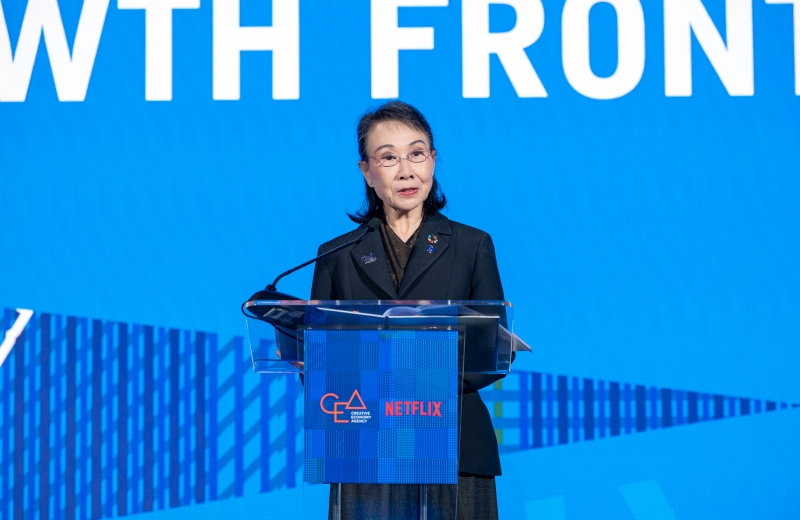
Mrs. Pimjai Leeissaranukul, Board Member Acting as Chairperson of the Creative Economy Agency and Chairman of the Federation of Thai Industries, said “creative industries should no longer be viewed solely as a reflection of the country’s cultural heritage, but as a diversified economic structure capable of generating growth in the digital and artificial intelligence (AI) eras. Thailand’s creative content industries currently generate approximately US$ 3.82 billion in gross value added (GVA), accounting for 7.88% of the creative economy.”
“Thailand is home to more than 32,000 businesses and over 150,000 highly skilled professionals across film, series, music, animation, gaming, broadcasting and other content-related industries. These capabilities provide a strong foundation for Thailand to leverage its cultural capital, creativity and intellectual property to compete in global markets.”
“CEA is developing the Thailand Creative Economy Action Plan 2028 - 2032 to establish a clear direction for the country’s creative economy development. The plan focuses on four strategic priorities: (1) promoting targeted creative industries in global markets, particularly high-growth creative content; (2) strengthening IP utilization and business scaling capabilities to transform creative works into value-generating assets; (3) developing talent and accelerating digital adoption to strengthen the competitiveness of creative businesses and professionals; and (4) expanding creative economy growth at the regional level to distribute economic opportunities nationwide,” Mrs. Pimjai said.
CEA and Netflix Open Pathways for Thai IP to Global Market
To unlock these opportunities, CEA is strengthening its collaboration with Netflix to bring Thailand’s cultural assets and creative talent to the global stage, creating new opportunities for investment, business expansion and access to international markets.
The partnership reflects a new direction for Thailand’s creative economy – moving beyond producing creative works and promoting cultural awareness towards building Creative IP that can become economic assets, generate revenue, support business expansion and connect with global investment ecosystems. The series “The Evil Lawyer” was one of the projects selected for CEA Content Lab 2023. Through the program, the project was further developed and presented at the Final Pitch, as well as participating in business matchmaking activities. This eventually attracted Netflix’s interest, leading to its production and release on the global platform. The series demonstrates the potential of developing Thai creative IP from the early stages through production and distribution on a global platform.
Advancing the creative economy in a new direction means shifting from “Creativity as Culture” to “Creativity as Capital,” laying the foundation for Thailand’s creative potential to evolve from cultural capital into economic assets that generate value and strengthen the country’s long-term competitiveness.
Policy Forums Connect Creative IP with Global Asset
The event also featured two key Policy Forums. The first, “From Creative Capital to Global Asset” brought together Mr. Andrew Ure, Vice President, Global Affairs – APAC, Netflix; Mr. Takonkiet Viravan, Group Chief Executive Officer, The One Enterprise Public Company Limited; and Mr. Farid Fezoua, Global Director of Equity, Funds, Venture Capital and Creative Industries, International Finance Corporation (IFC) to discuss pathways for transforming creative IP into investable and scalable global assets.The second, “Building the Enabling Environment: Policy, Platforms, and Incentives for a Competitive Creative Sector” featured Dr. Chakrit Pichyangkul, Executive Director, the Creative Economy Agency (CEA); Ms. Nathareekon Saesubak, Investment Promotion Officer, Senior Professional Level, Office of the Board of Investment (BOI); Mrs. Sritala Sutapak, Head of Digital Content Software Business, Department of International Trade Promotion (DITP); and Ms. Monchanok Tanasanti, Senior Professional Level Trade Officer, Head of IP Commercialization Group, Department of Intellectual Property (DIP), exploring policy, platforms and incentives needed to strengthen the competitiveness of Thailand’s creative sector.
The program also featured the Thailand Creative Economy Showcase, presenting high-potential Thai creative businesses and works with the potential to expand into global markets and attract investment, including One Enterprise Solutions, GDH 559, Karmakamet, and A49, among others. The event concluded with a Netflix Networking Reception, themed “Stories That Move Economies,” bringing together policymakers, investors and creative industry leaders to build connections and translate conversations from the forum into opportunities for policy, business and investment.
The “CREATIVITY AS CAPITAL: Driving the Next Growth Frontier” program, held as part of the 2026 IMF–World Bank Group Annual Meetings, marks an important step in strengthening international confidence in Thailand’s creative economy, attracting global investment and positioning Thai creativity as a new source of sustainable economic growth and global competitiveness.
Posted in news-en on ต.ค. 21, 2026